
Introducing Sentra: The Content Protection Solution for Disaggregated Piracy
- 6 min read
BCGuardian
Digital content protection has traditionally been organized around full works. For publishers, a title, author, ISBN, cover, or other identifying information make it relatively straightforward to find unauthorized copies, connect them to a known work, and pursue enforcement.
But some of the most commercially sensitive content does not circulate that way.
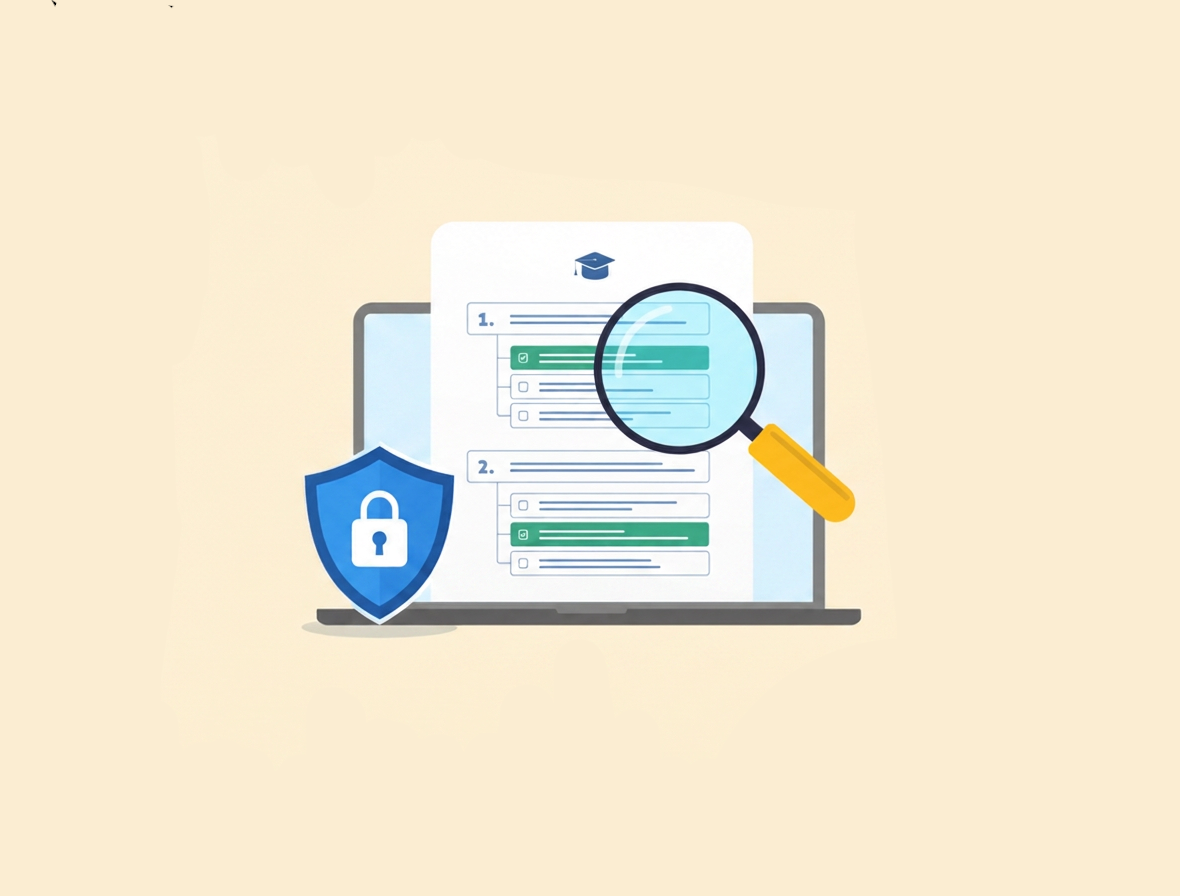
Exam questions are copied individually. Test banks are broken apart and reorganized. Problems and solutions are pulled from textbooks. Instructor materials appear on document-sharing sites. Passages from larger works are reproduced without the title, cover, metadata, CMI, or context that would ordinarily make the source easy to identify.
The content still has value, and in many cases, that value is exactly why it has been separated from the larger work.
Protecting content from disaggregated piracy requires a different approach. That is the problem we built Sentra to address.
Building on Years of Managed Protection
Sentra, the newest module within the AgoraVision Suite, represents the evolution of one of BCGuardian’s longest-running managed content protection offerings.
For years, our team has managed disaggregated content protection programs for some of the most established rights owners in publishing. Following our fundamental approach to intentional program design, these programs have generated tremendous amounts of data.
Every search, detection, channel, enforcement action, compliance check, and reappearance adds another data point. Over time, those data points reveal how unauthorized disaggregated content is circulating.
Sentra is designed to make better use of that information.
Sentra’s reporting environment allows users to build custom views using live program data. Alongside it is a closed agentic system, developed in-house, that evaluates program observations and distills them into useful points of intelligence.
The goal is not to replace expert analysis with automated summaries (our team isn’t going anywhere!) The goal is to identify patterns faster, surface exceptions, and make it easier to understand what the underlying data is telling us.
For a rights owner, that might mean identifying domains that repeatedly resurface or understanding which content suffers the greatest exposure. Never is the question simply, “How many notices were issued?”
Understanding the Market for Disaggregated Content
Sentra’s Explore feature takes this a step further.
Explore brings program observations into a single environment so clients can understand the scope and shape of their exposure. Rather than reviewing simple macro-level enforcement results, users can examine patterns across works, content types, platforms, enforcement status, and other dimensions of their programs.
This level of granularity is key. Ten thousand detections might represent ten thousand unrelated problems. Or they might trace back to a much smaller group of persistent sources and recurring behaviors.
These are two different problems, and they call for very different strategies.
Content Protection Should Be Testable
A challenging question in any content protection program is whether the program is configured correctly. Are search terms too broad? Are the heuristics too restrictive? Would a different matching threshold uncover meaningful additional content, or just create more noise?
Historically, answering those questions has meant A/B testing by adjusting configurations and watching what happens.
Sentra’s Experiment environment provides a more deliberate way to test those assumptions.
Elements of a workflow can be modified and run against the live market. Tighter heuristics can be compared with broader ones. Search strategies can be expanded or narrowed. Different approaches can be evaluated before they are incorporated into production.
A methodology that worked well two years ago, or even six months ago, should not automatically be assumed to be the best approach today. The market for pirated content changes, and content protection programs need to be able to dynamically respond.
Giving Analysts Better Tools
Sentra also includes investigative tools built around the work that happens before, during, and after enforcement.
- Domain profiling provides a structured view of the broader online footprint of sites distributing protected content. Profiles include records of hosting providers, social media profiles, other supporting intermediaries, and more.
- Automated on-demand compliance checks help determine whether previously enforced content has been removed, remains available, or has been reactivated.
- An integrated evidence capture system allows users to preserve live visual evidence as part of the investigative workflow.
As Sentra’s tool suite evolves, it will continue to bring more elements of frequently utilized escalation workflows into one environment, allowing rights owners to spend less time on the legwork of generating evidence, and more time understanding and deciding what to do with it.
Sentra Is Not a Substitute for a Managed Program
We do not believe effective content protection can be reduced to a dashboard.
Technology can search faster, organize more information, automate repetitive work, and expose patterns that are difficult to see manually. But the technology still needs to be pointed in the right direction.
Someone must decide what constitutes a meaningful match. A recurring source may require a different enforcement strategy. An unusual result may be noise, or it may be the first indication of a larger problem. At some point, a matter may need to move beyond routine notice and takedown.
Those decisions require expertise and judgment. That is why Sentra is inseparable from BCGuardian’s managed services and the work we perform with our stellar clients day in and day out. Together, we interpret what program data reveals, adjust methodologies, investigate emerging issues, and work to turn observations into action.
Sentra will provide better information and better tools. It does not replace the expertise behind the program.
Protecting the Parts Protects the Whole
Disaggregated piracy is easy to underestimate because each instance can look small. But the commercial value of published content does not disappear when that content is separated from the product in which it was originally published.
For educational and professional publishers in particular, individual components of a work can carry substantial value on their own. Protecting the work while ignoring those pieces leaves an important part of exposure unaddressed.
Sentra was built around that reality.
It gives our team and our clients a better way to identify disaggregated content, understand the market in which it circulates, test how we search for it, measure what happens after enforcement, and turn what we observe into intelligence.
It is the next part of the AgoraVision Suite and another step toward the principle behind the platform from the beginning:
One Platform. Total Content Protection.